Zelda: Tears of the Kingdom Redefines Open Worlds
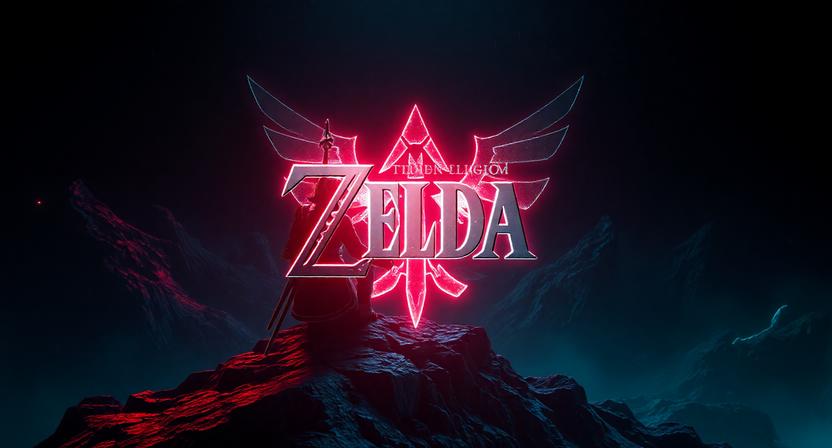
Nintendo's release of The Legend of Zelda: Tears of the Kingdom (TOTK) wasn't just a sequel; it was a fundamental re-engineering of the open-world genre. By doubling down on physics-based systems and emergent gameplay, Nintendo created a world where the player's imagination is the primary mechanic. [Source: Nintendo Developer Interview]
The Revolution of Ultrahand and Fuse
The core of the game’s innovation lies in its build system mechanics. The 'Ultrahand' ability allowed players to manipulate the environment with a level of freedom never before seen in a console title. This necessitated a sophisticated structural integrity system, where every creation—from a simple raft to a multi-stage rocket—responds realistically to physics simulations and environmental forces.

Technical Brilliance on Aging Hardware
Perhaps the most impressive feat is that TOTK runs on the Nintendo Switch, a platform with hardware capabilities far below its modern rivals. Nintendo achieved this through masterful optimization, including:
- Dynamic resolution scaling to maintain frame rates during complex build sequences.
- Seamless world transitions between the sky, surface, and the 'Depths.'
- A robust object-pooling system that tracks thousands of interactive elements simultaneously.
The Concept of Emergent Gameplay
TOTK encourages non-linear progression by providing a sandbox of tools rather than a checklist of tasks. If a player encounters a puzzle, there are often dozens of valid solutions involving material fusion or time-reversal mechanics. This level of player agency has set a new benchmark for game design lessons, proving that freedom and guidance can coexist in a massive world.
Legacy and Influence
The impact of Tears of the Kingdom will be felt for years, as developers across the industry look to integrate more systemic interactions into their own worlds. The reader should appreciate that Nintendo didn't just add more 'content'; they added more possibilities. It is a rare example of a game that respects the intelligence and creativity of its audience above all else.
Related Articles

Hogwarts Legacy: Magic and Controversy
Feb 1, 2023 • Top Games
August Game Launches: Saints Row and Soul Hackers
Aug 8, 2022 • Top Games
2023's Best Indie Games Recap
Dec 21, 2023 • Indie Games
Scale vs Polish: AAA Development Debates
Sep 17, 2023 • Game Development

Experimental Gameplay in July Releases
Jul 7, 2023 • Game Releases
Indie Games Building Momentum
Apr 16, 2023 • Indie Game Development
Hogwarts Legacy: Magic and Controversy
The launch of Hogwarts Legacy in February 2023 was a cultural phenomenon that extended far beyond th...
August Game Launches: Saints Row and Soul Hackers
The late July to early August period featured intense back-to-back launches that tested both publish...
2023's Best Indie Games Recap
Small Teams, Giant ImpactWhile 2023 was a year of massive AAA sequels, the indie scene provided the ...
Scale vs Polish: AAA Development Debates
The Great Divide in Modern Game DesignIn 2023, the gaming industry reached a crossroads where it had...
Experimental Gameplay in July Releases
Creative Risks in the Mid-Summer SlumpJuly's quieter release period allowed for the emergence of inn...
Indie Games Building Momentum
As the AAA cycle occasionally slows down, the Indie development scene continues to act as the indust...